Water Extraction in Hesperia, CA
Hesperia averages 6.19 inches of precipitation a year, yet standing water still shows up after a failed pipe, a heavy storm or a monsoon flash flood. The extraction crew removes it before it settles in.
(888) 774-9605Get the standing water removed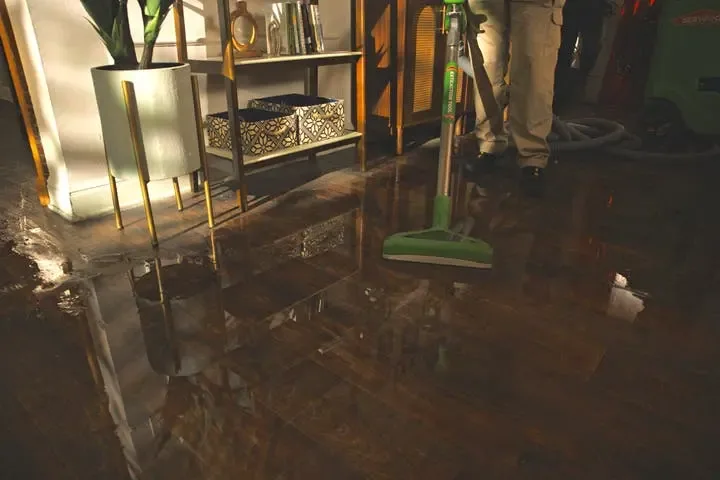
What a proper water extraction job includes
Dispatch at any hour
Active water is treated as urgent around the clock, weekends and holidays included, because every hour it sits adds to the tear-out.
Dried to IICRC S500
Equipment is sized to the class of loss and stays until readings sit within 2 to 4 points of a dry reference.
A claim file from day one
Moisture maps, daily psychrometric logs and timestamped photos before demolition go straight into the file.
Desert construction know-how
Slab floors, stucco walls, tile roofs and attic plumbing each hide water differently, and the walkthrough checks every one.
What to do about water extraction right now
These moves are safe for most households and keep the damage from growing before the crew gets there.
Find the source
Shut off the supply so no new water arrives.
Pull the water
Wands and pumps lift standing water from floors and carpet.
Check what is wet
Meters show where moisture remains in walls and subfloor.
Start the drying
Air movers and dehumidifiers dry what extraction missed.
What does water extraction cost in Hesperia, CA?
Extraction alone is the least costly stage when it starts early. Cost rises with the area soaked, the depth of the water and whether it came from a clean supply pipe or from a drain or storm.
One room, clean water
- Standing water fully extracted
- Padding and baseboards checked
- Drying equipment set and monitored
Several rooms
- Extraction across several rooms
- Wet padding lifted and removed
- Moisture mapping of walls and floors
Large or contaminated
- Heavy extraction with pumps and wands
- Contaminated materials removed
- Cleaning and sanitizing
What goes into the claim file
The file holds a moisture map, daily psychrometric logs, timestamped photos taken before demolition, the water category and class of loss and a line-item scope. Sudden and accidental water is often treated differently from slow leaks and outside flood water, so check your own policy; the California Department of Insurance explains how to raise a claim question, and Ready.gov flood safety covers prevention. Ranges are typical, not a quote; the water damage cost calculator gives a closer number.
How the water extraction job runs, step by step
Size up the water
The crew checks depth, source and spread.
Choose the tools
Wands, pumps or vacuums are picked for each surface.
Take readings
Meters confirm what is still wet.
Hand off to drying
Dehumidifiers take over from there.
Water Extraction: causes, drying and the claim
When a pipe fails or a storm pushes water through a door, water extraction is the first job. In Hesperia that can follow a plumbing failure, a rare heavy rain or a monsoon flash flood, and the town service hub lists the other water problems the crew handles. Speed matters because water wicks into drywall and padding quickly.
How extraction works
The extraction crew picks the tool to match the surface and works from the lowest point outward so nothing pools behind.
- Wand extractors lift water from carpet and padding
- Submersible pumps clear deeper standing water
- Wet vacuums handle corners, stairs and tight spots
What gets checked after the water is out
Pulling the water is only the start. Moisture meters and a thermal camera check the subfloor, the base of the walls and the carpet padding, because water that cannot be seen still keeps a structure wet. Those readings decide whether padding is lifted, drywall is cut back or dehumidifiers go in. Under wood planks and along seams, water can hide, so the crew checks there too.
Standing water pulled off carpet, tile and slab floors with truck-mounted and portable units.
(888) 774-9605Get the standing water removedSituations that call for extraction
- A split supply pipe or failed fitting
- A washer, dishwasher or water heater overflow
- Storm water carried in through a door or garage
- A toilet or tub that overflowed upstairs
Clean supply water is the simplest case. Water from a drain or from outdoors carries contaminants, and then the job shifts to cleaning and sanitizing as well as removal.
Why waiting costs more
Carpet padding holds water like a sponge, and drywall wicks it upward from the floor. Each added day widens the wet area and raises the odds of a mold problem, so the drying team pushes for early extraction and a clear plan, usually followed by structural drying.
Water extraction across Hesperia and nearby communities
One dispatch covers the streets listed here and the towns around them, at any hour.
The extraction crew works across Hesperia, from homes on residential streets to shops along Main Street, Bear Valley Road and Ranchero Road, and into garages, kitchens and living areas alike.
The same service nearby: water extraction in Adelanto, Victorville, Apple Valley.
Water Extraction: questions homeowners ask
Still dealing with it?
Standing water in the house? The extraction crew can start the pumps.
(888) 774-9605Ask about water extractionHow quickly does water soak into a home?
Quickly. Carpet padding and drywall start drawing water upward as soon as it lands, so the sooner extraction begins, the less material has to be torn out.
Can a wet carpet be saved?
Often, when the water was clean and extraction began early. Padding usually has to be discarded, while the carpet itself can sometimes be lifted, dried and reinstalled.
Does extraction work on storm water?
Yes, though storm water carries mud and debris, so the job adds cleaning and sanitizing. After a monsoon flash flood, pumps and wands remove the water and then the silt is cleared out.
What happens after the water is removed?
Moisture readings set the next step. Wet padding may be lifted, baseboards pulled and drying equipment set so the walls, subfloor and framing dry completely.
Should the power be turned off first?
Yes, for any wet room. Standing water around outlets, cords and appliances is a shock risk, so breakers for the affected area should be switched off before anyone walks in.
Is extraction different from drying?
Yes. Extraction removes the water that can be pulled out, and structural drying removes the moisture left inside materials. Most jobs need both, one after the other.
Water on the floor? Get it pulled out before it reaches the walls.
Extraction is the fastest way to limit what gets soaked. The crew removes the water, checks the structure with meters and sets drying equipment where it is needed.
(888) 774-9605Call for water extraction now