Structural Drying in Hesperia, CA
Winter is the wet season and summer highs approach 100 degrees, but neither sets the drying plan. The drying team follows moisture readings in the floors, walls and framing until they match an unaffected area.
(888) 774-9605Get a drying plan from readings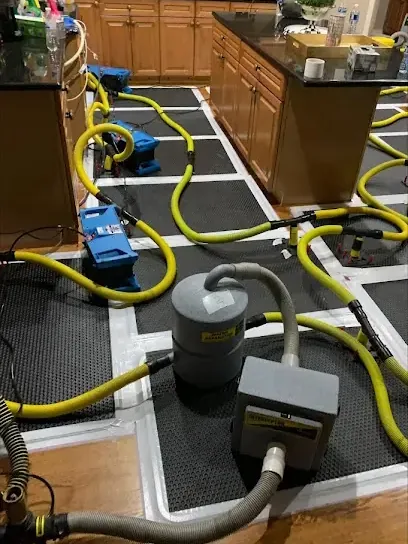
What a proper structural drying job includes
Dispatch at any hour
Active water is treated as urgent around the clock, weekends and holidays included, because every hour it sits adds to the tear-out.
Dried to IICRC S500
Equipment is sized to the class of loss and stays until readings sit within 2 to 4 points of a dry reference.
A claim file from day one
Moisture maps, daily psychrometric logs and timestamped photos before demolition go straight into the file.
Desert construction know-how
Slab floors, stucco walls, tile roofs and attic plumbing each hide water differently, and the walkthrough checks every one.
What to do about structural drying right now
These moves are safe for most households and keep the damage from growing before the crew gets there.
Map the moisture
Meters and a thermal camera mark the wet areas.
Set the equipment
Air movers and dehumidifiers go where readings call.
Recheck each visit
Readings show whether drying is on track.
Confirm dry
Equipment comes down at the reference level.
What does structural drying cost in Hesperia, CA?
Drying cost follows the size of the wet area and the materials involved. A single room dries on a short plan, while slab floors, thick framing and whole floors need more equipment and a longer run.
One room
- Moisture mapping
- Air movers and dehumidifier
- Visit readings
Several rooms
- Equipment in each room
- Wet materials removed
- Daily readings
Slab or whole floor
- Desiccant and LGR units
- Extended equipment time
- Final readings
What goes into the claim file
The file holds a moisture map, daily psychrometric logs, timestamped photos taken before demolition, the water category and class of loss and a line-item scope. Sudden and accidental water is often treated differently from slow leaks and outside flood water, so check your own policy; the California Department of Insurance explains how to raise a claim question, and EPA WaterSense covers prevention. Ranges are typical, not a quote; the water damage cost calculator gives a closer number.
How the structural drying job runs, step by step
Map
Meters trace where moisture sits.
Set up
Equipment goes in at the right spots.
Monitor
Readings repeat at every visit.
Confirm
Equipment comes down at dry.
Structural Drying: causes, drying and the claim
Structural drying is the stage that decides whether a wet building recovers or develops hidden problems later. After water extraction, moisture still sits in framing, subfloor and drywall, and the structural drying team in Hesperia removes it with measured, repeated checks. The town hub lists the connected water services.
Why the weather does not set the plan
Winter is Hesperia's wet season, and summer highs typically approach 100 degrees, so it is tempting to think the climate does the drying. It does not. Walls, subfloors and cabinets hold moisture in their own cavities, and a surface that feels dry can still be wet inside. The plan comes from the readings, not the forecast.
Tools used on a drying job
- Moisture meters that read wood, drywall and concrete
- Thermal cameras that show cool, wet patches
- Air movers that push dry air across surfaces
- Dehumidifiers that pull water vapor out of the air
Framing, subfloor and slabs dried with LGR dehumidifiers to within 2 to 4 points of dry.
(888) 774-9605Get a drying plan from readingsThe drying cycle
Readings are taken at the first visit to set targets, then repeated at each visit. Equipment is repositioned as wet areas shrink, and anything holding too much moisture, such as soaked padding or swollen board, is removed instead of dried. When every reading matches the reference area, the equipment comes down and the final numbers are logged. Documentation is part of the job: photos and reading logs go to the owner and the adjuster so the claim shows how the structure was dried and when.
Signs a building is still wet
- A musty smell that lingers after cleanup
- Cupped or buckled flooring
- Paint that bubbles or peels on lower walls
- Baseboards that stay cold or damp to the touch
None of these proves a problem, but together with a meter reading they show whether a wet area is truly dry or just looks that way. Mold can take hold in framing that stays damp, which is why drying is never cut short.
Structural drying across Hesperia and nearby communities
One dispatch covers the streets listed here and the towns around them, at any hour.
The drying team works across Hesperia, in homes on residential streets and in commercial buildings along Main Street, Bear Valley Road and Ranchero Road, wherever extraction has left moisture in the structure.
The same service nearby: structural drying in Adelanto, Victorville, Apple Valley.
Structural Drying: questions homeowners ask
Still dealing with it?
Structure still damp after the water is out? The drying team can read it.
(888) 774-9605Ask about a drying planHow does the team know when drying is done?
Readings are compared with an unaffected reference area. Equipment stays until the wet materials match it, and the final numbers are logged for the owner and the adjuster.
Does hot summer weather speed up drying?
Not in a way the plan relies on. Even with highs near 100 degrees, wall cavities and subfloors stay damp until equipment removes the moisture, so the plan follows readings in the structure.
Why are fans and dehumidifiers used together?
Air movers lift moisture off surfaces into the air, and dehumidifiers pull it out of that air. Either one alone leaves moisture circulating or trapped in the materials.
Can drywall and flooring stay in place?
Often, when the water was clean and the materials have not swollen or softened. Meter readings show which layers can dry in place and which must be removed to reach the wet framing.
What if drying stops too early?
Moisture left inside framing or subfloor can warp wood, loosen new flooring and invite mold. Finishing against the reading targets helps avoid those problems.
Who needs the drying records?
The owner and the adjuster. Logs with dates, readings and equipment help a claim show that the structure was dried properly.
Wet walls or floors? Get meters on them and equipment running.
Drying is finished by readings, not by feel. The crew maps the moisture, sets equipment where the numbers call for it and checks again at each visit until the structure matches a dry reference.
(888) 774-9605Hesperia structural drying help