Structural Drying in Adelanto, CA
Wet framing, subfloor, slabs and wall cavities do not dry just because the room feels dry. The drying team sizes air movers and LGR dehumidifiers to the class of loss and leaves them until readings match dry materials.
(888) 774-9605Get the framing and slab measured dry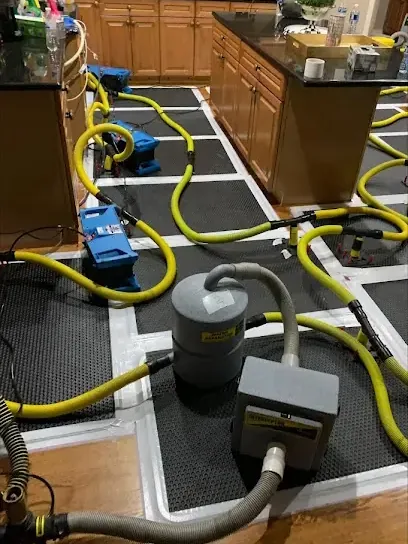
What a proper structural drying job includes
Dispatch at any hour
Active water is treated as urgent around the clock, weekends and holidays included, because every hour it sits adds to the tear-out.
Dried to IICRC S500
Equipment is sized to the class of loss and stays until readings sit within 2 to 4 points of a dry reference.
A claim file from day one
Moisture maps, daily psychrometric logs and timestamped photos before demolition go straight into the file.
Desert construction know-how
Slab floors, stucco walls, tile roofs and attic plumbing each hide water differently, and the walkthrough checks every one.
What to do about structural drying right now
These moves are safe for most households and keep the damage from growing before the crew gets there.
Stop the source
Drying cannot start while water is still coming in.
Remove standing water
Extraction comes before air movers.
Keep the house closed
Open windows can add moisture or dust.
Leave equipment running
Turning it off resets the drying.
What does structural drying cost in Adelanto, CA?
Structural drying typically runs $1,200 to $16,000 or more. Cost depends on the class of loss, the number of air movers and dehumidifiers, how many days the readings take to reach dry and whether slabs or hardwood need desiccant drying.
One room
- Air movers and one LGR
- Three days of logs
- Readings report
Several rooms
- Containment
- Multiple LGR units
- Daily monitoring
Slab or whole floor
- Desiccant drying
- Hardwood panels
- Extended monitoring
What goes into the claim file
The file holds a moisture map, daily psychrometric logs, timestamped photos taken before demolition, the water category and class of loss and a line-item scope. Sudden and accidental water is often treated differently from slow leaks and outside flood water, so check your own policy; the California Department of Insurance explains how to raise a claim question, and EPA WaterSense covers prevention. Ranges are typical, not a quote; the water damage cost calculator gives a closer number.
How the structural drying job runs, step by step
Map
Meters and thermal imaging set the baseline.
Set
Size air movers and dehumidifiers to the class.
Log
Daily psychrometric and moisture readings.
Verify
Equipment out at dry reference readings.
Structural Drying: causes, drying and the claim
Structural drying is the part of a water loss that decides whether framing, subfloor, slab and drywall stay sound. Surfaces dry first and feel fine, while the water inside studs, plates and concrete is still there. The IICRC S500 standard sets the method: map the moisture, size the equipment to the loss and keep drying until readings match a dry reference in the same building.
How the equipment is sized
The drying team sets the class of loss by how much water the materials absorbed, from Class 1 for a small area of low-porosity material to Class 4 for dense materials like concrete and hardwood. Air movers are placed along wet walls, and dehumidifiers are sized to the room volume and the class.
- Air movers to move dry air across wet surfaces
- LGR dehumidifiers to pull water out of the air
- Desiccant units for slabs and cold conditions
- Containment to focus the drying on the wet area
Desert air and drying
Outside air here is dry most of the year, which helps evaporation once the water is out. It does not dry the inside of a wall or a slab on its own, and winter cold slows the whole process. The drying team still controls the air inside the containment, because the readings, not the weather, decide when the job is done.
Framing, subfloor and slabs dried with LGR dehumidifiers to within 2 to 4 points of dry.
(888) 774-9605Get the framing and slab measured dryDaily readings and the dry reference
Each day the crew records temperature, relative humidity and grains per pound inside and outside the drying area, and takes moisture readings at the same marked spots. A dry reference is an unaffected area of the same material in the same home. Equipment comes out when the wet areas read within 2 to 4 points of that reference.
- Psychrometric log each visit
- Moisture readings at marked points
- Photos of meters for the claim file
When structural drying is needed
Almost every loss: slab leak water damage, burst pipe water damage, ceiling leaks and appliance failures all end with structural drying. The drying time estimator gives a typical window before the walkthrough.
Structural drying across Adelanto and the Victor Valley
One dispatch covers the streets listed here and the towns around them, at any hour.
Coverage runs across ZIP 92301, from the Highway 18 subdivisions and the southern tract neighborhoods to Air Expressway, Bartlett Avenue, the U.S. Highway 395 corridor and the rural lots toward El Mirage.
Nearby coverage reaches Victorville, Apple Valley, Hesperia, Phelan, El Mirage, Spring Valley Lake, Lucerne Valley, Barstow.
Structural Drying: questions homeowners ask
Still dealing with it?
Walls and floors still wet inside? The drying team runs structural drying 24/7.
(888) 774-9605Book moisture readings for the whole houseWhat is structural drying?
It is drying the building itself, the framing, subfloor, slab and wall cavities, not just the surfaces, to a measured dry standard under IICRC S500.
How long does structural drying take?
Usually three to seven days. Class 4 materials like concrete and hardwood take longer, and the equipment stays until readings match a dry reference.
Why can't the drying equipment be turned off at night?
Drying works by keeping dry air moving across wet materials. Turning the equipment off lets moisture settle back in and adds days to the job.
What is a dry reference in structural drying?
An unaffected area of the same material in the same home. Wet areas are dried until they read within 2 to 4 points of that reference.
Does dry desert air make structural drying faster?
It helps evaporation once the water is out, but it does not dry the inside of walls or a slab on its own. Readings still decide when the job is done.
What is an LGR dehumidifier?
Low grain refrigerant dehumidifiers pull more water from the air than standard units, so materials keep drying even as the room gets drier.
Felt dry but meters say wet? Get the structure dried to the standard.
Wet framing and slabs hold water long after surfaces feel dry. The crew sizes the equipment to the loss and logs readings until dry.
(888) 774-9605Bring in the structural drying team