Water Extraction in Apple Valley, CA
The extraction crew pulls standing water out of floors, carpet and padding with truck-mounted and portable units, so drywall and subfloors stop wicking moisture and the drying stage can begin on an open floor.
(888) 774-9605Call for water extraction help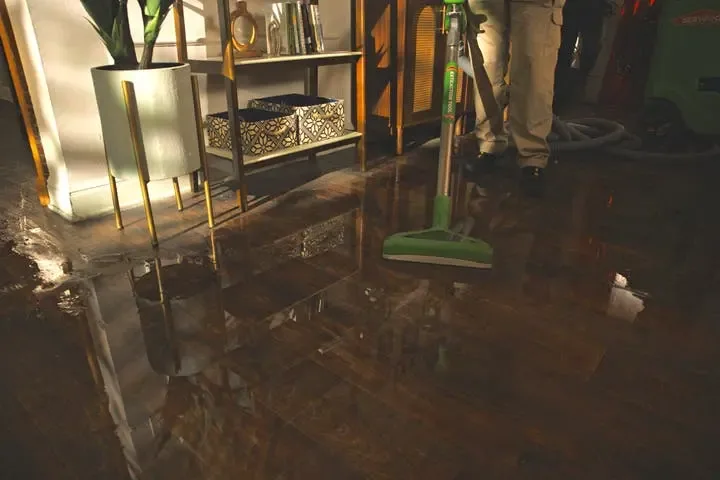
What a proper water extraction job includes
Dispatch at any hour
Active water is treated as urgent around the clock, weekends and holidays included, because every hour it sits adds to the tear-out.
Dried to IICRC S500
Equipment is sized to the class of loss and stays until readings sit within 2 to 4 points of a dry reference.
A claim file from day one
Moisture maps, daily psychrometric logs and timestamped photos before demolition go straight into the file.
Desert construction know-how
Slab floors, stucco walls, tile roofs and attic plumbing each hide water differently, and the walkthrough checks every one.
What to do about water extraction right now
These moves are safe for most households and keep the damage from growing before the crew gets there.
Shut off the source
Close the valve or stop the leak so no new water joins the pool.
Keep power safe
Stay out of standing water near outlets, cords and appliances.
Move small items
Lift papers, shoes and rugs onto dry surfaces.
Call the crew
Say where the water came from and how deep it looks.
What does water extraction cost in Apple Valley, CA?
Extraction on its own is usually the smaller part of a water job. Clean water in one room runs $500 to $1,500, several rooms $1,500 to $4,000, and large or contaminated floods $4,000 to $9,000 or more.
One room, clean water
- Pump and wand removal
- Carpet and pad check
- Moisture readings
Several rooms
- Truck-mounted unit
- Padding removal
- Wall moisture mapping
Large or contaminated
- Deep standing water
- Debris and mud removal
- Sanitizing steps
What goes into the claim file
The file holds a moisture map, daily psychrometric logs, timestamped photos taken before demolition, the water category and class of loss and a line-item scope. Sudden and accidental water is often treated differently from slow leaks and outside flood water, so check your own policy; the California Department of Insurance explains how to raise a claim question, and Ready.gov flood safety covers prevention. Ranges are typical, not a quote; the water damage cost calculator gives a closer number.
How the water extraction job runs, step by step
Assess the water
Depth, source and water type are checked first.
Extract the bulk
Truck-mounted and portable units remove it.
Check what soaked
Meters find wet padding, walls and framing.
Hand off to drying
Equipment is then set for the structure.
Water Extraction: causes, drying and the claim
February is typically the wettest month in Apple Valley, at about 1.2 inches of rain, yet the August 2023 Tropical Storm Hilary showed that sudden storm water can flood parts of town too. Extraction covers both situations: water from a failed pipe, appliance or roof inside the house, and water that enters from outside after a downpour. Either way, the first job is the same, getting the water off the surfaces.
What extraction removes
The crew picks the unit by how deep the water sits and what it is sitting on.
- Standing water on tile, wood and vinyl floors
- Water trapped in carpet and the padding below
- Pooled water in garages, laundry rooms and entries
- Muddy storm water carried in at doors and thresholds
How the crew works
Before any hose is unrolled, the source is stopped and the electrical risk is checked. A truck-mounted unit then pulls large volumes through long hoses, while portable pumps and wand tools handle stairs, closets and rooms the truck cannot reach. Carpet is lifted and the pad is checked, because padding holds far more water than it appears to. Moisture meters then map the damp walls and floors so the crew knows how far the water traveled.
Standing water pulled off carpet, tile and slab floors with truck-mounted and portable units.
(888) 774-9605Call for water extraction helpAfter the water is out
Extraction removes the bulk, but not the moisture soaked into materials. That part belongs to the drying stage, where air movers and dehumidifiers pull the rest out of walls and flooring. Read how structural drying finishes the job.
- Wet padding and soaked drywall removed if needed
- Air movers and dehumidifiers set room by room
- Readings logged for the insurance file
Why speed matters
Water keeps moving into drywall, baseboards and subfloors for as long as it stands. Mold can begin to grow in damp materials within 24 to 48 hours, so an early start on extraction is the most effective way to keep a small loss from becoming a large one. The local water damage crews work from the first reading to the last.
Water extraction across Apple Valley and nearby communities
One dispatch covers the streets listed here and the towns around them, at any hour.
The extraction crew covers homes and shops from the Mojave River edge of town to the foothills, along State Route 18 and Bear Valley Road and through the Apple Valley Ranchos grid, in ZIP codes 92307 and 92308.
The same service nearby: water extraction in Adelanto, Victorville, Hesperia.
Water damage restoration in Apple Valley · every town covered
Water Extraction: questions homeowners ask
Still dealing with it?
Standing water in the house? Describe what happened and the crew will plan the extraction.
(888) 774-9605Talk to the extraction crewHow fast can standing water be removed?
That depends on how deep the water is and which rooms it reached. A truck-mounted unit clears large volumes much faster than a portable pump, so the crew uses both wherever the layout allows.
Does the carpet have to be thrown out?
Not always. Clean water caught early often lets the carpet be lifted, extracted and dried, while the padding is usually replaced. Sewage or long-standing water changes that decision.
Is storm water handled differently from pipe water?
Yes. Storm water carries mud and contaminants, so the crew removes more material and sanitizes after extraction. Clean pipe water is mostly a matter of removal and drying.
Can a household wet vacuum do the job?
A wet vacuum can lower the level in a small spill, but it cannot reach water inside padding, wall bases or the subfloor. Calling early gets those hidden areas extracted properly.
Will extraction alone dry the house?
No. Extraction removes the standing water, while the moisture inside walls and flooring needs air movers and dehumidifiers afterward. That is the drying stage.
What should be ready when the crew reaches the house?
Clear access to the wet rooms, the water off at the source and photos of the damage if possible. Move small valuables, but leave heavy furniture to the crew.
Standing water is soaking into the floors right now
Every hour water stays in carpet and drywall adds to the repair. Call and the extraction crew sets up the pumps and starts moving the pool out of the house.
(888) 774-9605Call about water removal