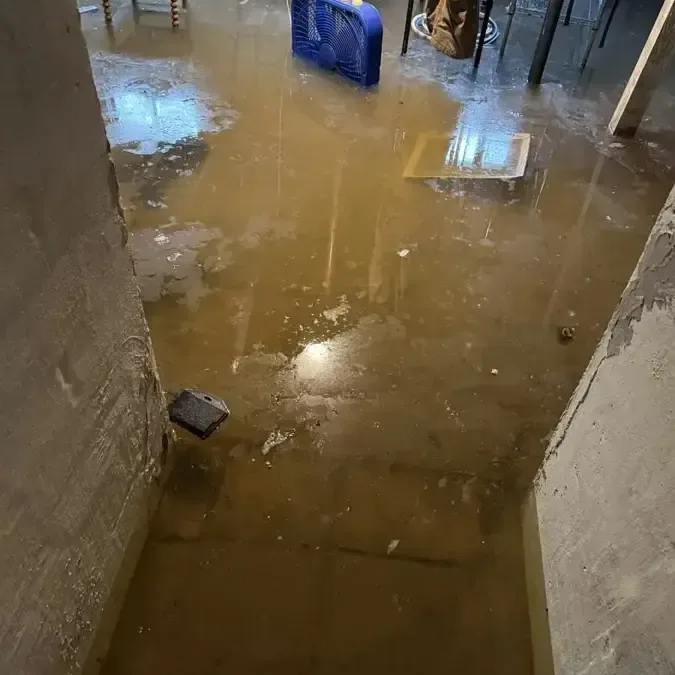
August 2023 Tropical Storm Hilary, the first tropical storm to hit California in more than 80 years, soaked the region from the coast to the desert. A household in Adelanto or Apple Valley that found silt, soft drywall or a wet garage floor afterward faced storm water cleanup, which follows different rules than a broken pipe.
Key takeaways
- Storm runoff that enters a house is treated as Category 3 water, because it crosses soil, yards and roads before it reaches the floor.
- On August 20, 2023, parts of the Victor Valley flooded, and sheriff's officials said many intersections were flooded with road edges compromised by swift flowing water.
- Silt, wet carpet pad and the lower part of soaked drywall are usually removed, while hard surfaces and framing are cleaned and dried.
- Dated photos, a list of damaged belongings and the crew's moisture readings are the records an adjuster asks for first.
- Rain that starts slowly can still end in heavy flow, so damp baseboards and soft drywall deserve attention before the sky clears.
What the storm did across the High Desert
August 2023 Tropical Storm Hilary reached the Victor Valley as a long wet day rather than a short burst. Rain began slowly around 3 a.m. across the High Desert and intensified by 2 p.m.
In Apple Valley, parts of the town flooded on August 20, 2023. Sheriff's officials said many intersections were flooded and road edges were compromised by swift flowing water.
Adelanto sits in the same valley, in the Mojave Desert at 2,868 feet, and the same system soaked the region from the coast to the desert. A storm that large tests every garage door, door threshold and low floor in a neighborhood.
Early signs are easy to miss when the rain starts slowly. A short walk through the house after a storm turns up most of them.
- A thin mark of silt or mud along the base of a wall or garage door
- Baseboards that feel cool and damp or have started to swell
- Carpet that squishes underfoot near an exterior door
- Drywall that looks darker near the floor or feels soft when pressed
Why storm water counts as Category 3
Water that has crossed yards, driveways and roadsides picks up soil, fertilizer, pet waste and whatever else sits on the ground. Restoration standards such as IICRC S500 therefore class storm runoff that enters a building as Category 3, the most contaminated category.
A clean supply pipe leak is a different case, because that water starts clean and the materials it touches can often be dried in place. Storm water changes the plan, since anything porous that soaked it up can hold contamination.
What is usually removed
- Carpet and carpet pad that stayed wet
- Drywall and insulation that wicked water up from the floor
- Particleboard cabinet bases and cardboard storage that soaked through
- Mud and silt on every surface, shoveled and rinsed out before anything else
What is usually cleaned and kept
Concrete slabs, tile, framing, solid wood trim, metal and plastic items can be cleaned with an antimicrobial and then dried. The crew decides item by item, using moisture readings instead of appearance.
The first day after water gets in
Safety comes before cleanup. Standing water near outlets, cords or a panel is an electrical hazard, so power to that part of the house stays off until it is checked.
Early water extraction removes standing water and mud while the damage is still shallow. Waiting gives drywall and carpet pad time to wick water upward, and a small job grows into a large one.
- Stay out of standing water until the power is confirmed off
- Photograph the silt mark, the wet walls and the damaged belongings before anything moves
- Lift furniture legs onto foil or blocks and carry paper, electronics and keepsakes to a dry room
- Skip the household vacuum, which is not built for wet or contaminated debris
- Open interior doors and cabinet doors so air reaches the wet walls
Extraction, removal and drying in order
A storm job follows a fixed order, and each step sets up the next one.
Extraction and mud removal
Pumps and wet vacuums pull the standing water first. Shovels, squeegees and rinse water then take the silt out of the garage, the entry and the floors.
Removing ruined materials
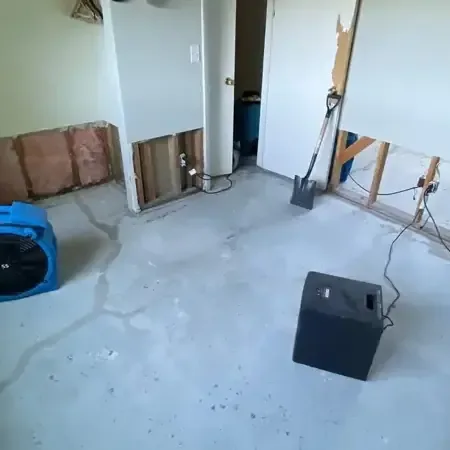
Wet carpet, pad and the lower part of soaked drywall come out above the height the water reached. Insulation behind that drywall goes too, so the wall cavity can be cleaned and dried.
Drying and readings
Air movers and LGR dehumidifiers run while a moisture meter and infrared imaging track every wall and the slab. The equipment comes out only when readings match dry reference material, a process covered under structural drying.
How old lakebed ground and culverts shape runoff
Apple Valley Dry Lake was once a shrubby lakebed and is now mostly indistinguishable from the subdivided grid of the town. Land use researchers note that roadbeds and culverts have altered drainage along the Mojave River valleys, letting development reach even onto former dry lakes in some cases.
None of that predicts which street or lot takes water in a given storm. It simply explains why runoff in a built up desert town follows roads, gutters and property edges instead of open ground.
An owner who finds water against a slab edge or garage door can ask for flash flood cleanup with moisture mapping, which shows whether water went into the base of the wall. Water damage help across Apple Valley follows the same order.
Records that help a claim go smoothly
Policies often treat storm runoff and plumbing leaks differently, so the first question from an adjuster is where the water came from. Clear records answer that question quickly.
Mold can begin to grow on damp material in 24 to 48 hours, which is why records and extraction start together instead of one after the other.
- Dated photos of the silt mark, the wet rooms and each damaged item
- A short list of ruined belongings with an approximate age and value
- Moisture readings and the drying log kept by the crew
- Receipts for any emergency work done before the claim is opened
Questions
Is every bit of storm runoff inside a house Category 3?
In most cases, yes. Water that enters from outside across the ground is treated as Category 3 under IICRC S500, so porous materials are removed and hard surfaces are cleaned and treated.
Can carpet be saved after storm water?
Carpet and pad that sat in storm water are normally discarded, because the pad holds contamination that cannot be cleaned out. Hard flooring over a slab is usually cleaned and dried instead.
How long does drying take after a storm?
It depends on the materials and how long they stayed wet, so the crew follows moisture readings instead of a calendar. Equipment stays until the framing and slab match dry reference readings.
Should the power stay off in a wet room?
Yes. Standing water near outlets, cords or a panel is an electrical hazard, and power to that area stays off until it has been checked.
Can a storm that begins slowly still cause serious damage?
It can. During August 2023 Tropical Storm Hilary, rain began slowly around 3 a.m. and had intensified by 2 p.m. across the High Desert, so early damp spots are worth checking before the heaviest rain peaks.