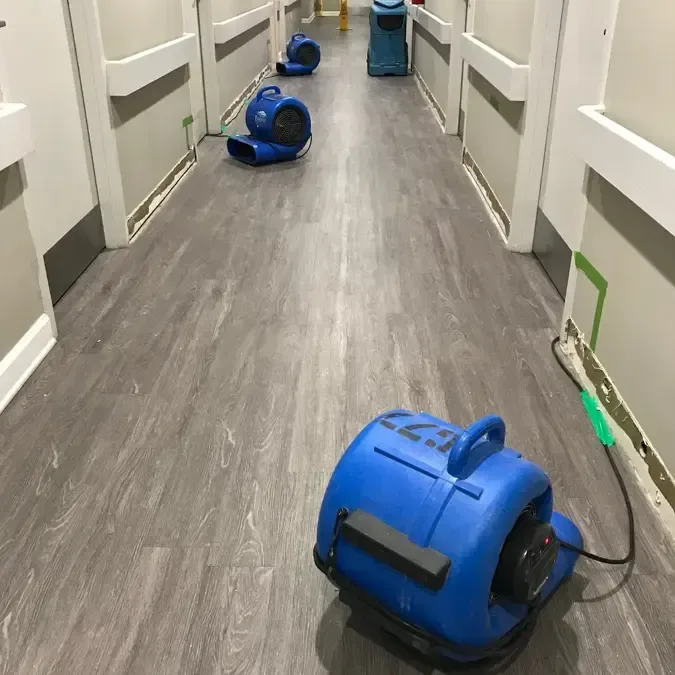
Large regional distribution centers sit in the Las Colinas community in the northern part of Rialto. When water reaches a building like that, the drying plan has to cover a huge floor, tall walls and stock that needs protection.
Key takeaways
- A large building is dried in zones, so dry areas keep working while wet areas are treated.
- Pallets, racking and packaging soak up water quickly, so stock is lifted or moved before the slab is addressed.
- Concrete slabs hold water longer than carpet or drywall, and dehumidifiers run until readings match dry reference material.
- A manager's day one record of photos, floor plans and inventory shapes the insurance claim.
- The City of Rialto says water and sewer service varies by location, so knowing the provider for a building helps when a shutoff is needed.
What makes a large building different
The 2020 Census counted 104,026 residents in Rialto, and Las Colinas in the northern part of the city holds large regional distribution centers. A water loss in a building that size behaves differently from a house leak, because the floor area, the wall height and the amount of stored material are all bigger.
Water spreads across a flat slab toward drains and low spots, and it wicks up pallets, cardboard and wall bases along the way.
Buildings with several tenants add another layer, because water can cross a shared wall or ceiling into a neighboring space. Help with commercial water damage starts by finding every space the water reached.
- A roof drain that overflows during a storm
- A broken supply pipe or valve
- Sprinkler piping that cracks or is struck by equipment
- Restroom and break room plumbing
- Air conditioning condensate drains that back up
- Dock door seals that fail during a storm
Mapping the loss zone by zone
The first step is a moisture map. The crew checks floors, wall bases and racking with a meter and infrared imaging, then marks the wet area on a plan.
Each zone gets its own dry target and its own equipment, which keeps unaffected parts of the building in use. The approach is the same one laid out under commercial water damage.
Large slabs can hide water under coatings and sealers, so readings are taken in a grid, with extra points near joints and wall bases where water collects.
Moisture maps are repeated daily, because a zone that read wet on the first day may be dry by the third while a neighboring one is not.
Protecting stock, racking and the slab
Stock is the fastest moving cost in a warehouse loss. Handling it in the right order limits what is lost.
- Lift pallets off wet floors before the water reaches the bottom layer
- Move undamaged stock to a dry zone and label it
- Keep damaged stock separate and photograph it by pallet
- Check the base plates of racking for standing water
- Record lot numbers or counts before anything is discarded
Wood and plastic
Wood pallets, plastic totes and metal shelving can usually be cleaned and dried, then checked before they go back into use.
Cardboard and paper
Cartons, labels and paper packaging that stayed wet are normally discarded, because they hold moisture and lose strength.
Electronics and sealed goods
Powered equipment and sealed products are inspected by the manager before anything ships, since hidden moisture is hard to see from outside a package.
Drying slabs and tall walls
Equipment is sized to the volume of the building, not to the size of the wet patch, and fans push air across the surface so moisture can leave.
The concrete slab
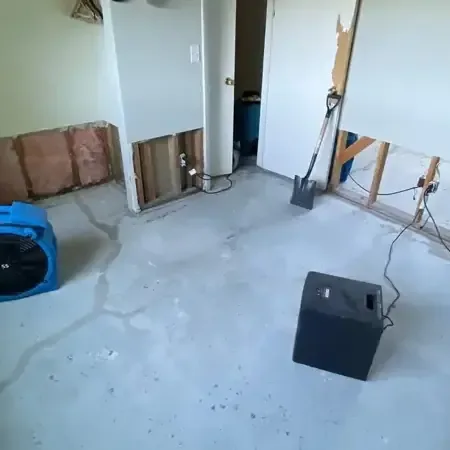
A slab holds water longer than carpet or drywall, so large LGR dehumidifiers and air movers run until readings fall to a dry reference. Rushing the job leaves moisture behind that can lift coatings and floor finishes.
Coated or sealed concrete dries slowly because the finish traps moisture, so the crew may need to open or vent the surface.
Walls, offices and mezzanines
Drywall in offices and break rooms is checked at the base and opened if saturated. Insulation and the lower panels of wall systems are read as well, and the process is covered under structural drying.
Utilities, shutoffs and safety in a big building
Large buildings have more places for water to meet electricity. Panels, dock equipment, conveyor controls and charging stations all need to be checked before an area is entered.
A wet slab is slippery, and forklift traffic through a wet aisle is a hazard. Safety walks come before equipment setup.
Water that reaches electrical gear is a stop moment. The area stays closed until a qualified electrician has cleared it.
- Locate and close the valve feeding the leaking system
- Have power to wet areas isolated and checked
- Keep forklift routes and exits clear
- Place signs on wet floors
- Share the zone map with each shift
Keeping operations moving
A zoned plan lets the dry part of the building keep working. The crew schedules noisy or messy steps around shifts where possible and keeps cords and equipment out of forklift routes.
Downtime is a cost of its own. A manager can ask the insurer about business interruption coverage, and daily readings give a factual basis for the timeline.
More help for the area sits under Rialto.
- Mark each zone with signs or tape
- Keep aisles and exits clear of hoses and cords
- Station equipment where it does not block traffic
- Share daily readings with the manager so the plan can shift
- Plan dock access so deliveries are not blocked
Records a manager needs on day one
Good records speed a claim and settle questions about what was lost. The City of Rialto says water and sewer service varies by location, so noting which provider serves the building helps when a shutoff is needed.
Photos taken from the same spots each day show how the drying is progressing and help the manager plan.
- Dated photos of the source and each wet zone
- A floor plan with the wet areas marked
- Inventory counts by zone and by pallet
- Contact names for affected tenants or departments
- Notes on which valves were closed and when
Questions
Can a distribution center stay open during drying?
Often in part. Zones separate wet areas from dry ones, so unaffected parts of the building can keep operating while the wet zone is treated.
How is a large concrete slab dried?
With LGR dehumidifiers and air movers that run until moisture readings match a dry reference. The slab is read at many points, not at a single spot.
What happens to wet pallets and packaging?
Wood pallets can often be dried, while cardboard and absorbent packaging that stayed wet is usually discarded. The manager decides what is salvageable after the crew documents it.
Does water from a neighboring unit count as a loss?
Yes. Water that enters from an adjoining tenant space is treated like any other loss, and photos plus moisture readings show where it came from.
Why does the water provider matter in a large building?
The City of Rialto says water and sewer service varies by location, so knowing the provider speeds up a shutoff or a report.
Does wet racking need to be inspected?
Yes. Standing water at base plates and floor anchors is checked, and a manager decides whether a rack section returns to service after it has been cleaned and dried.