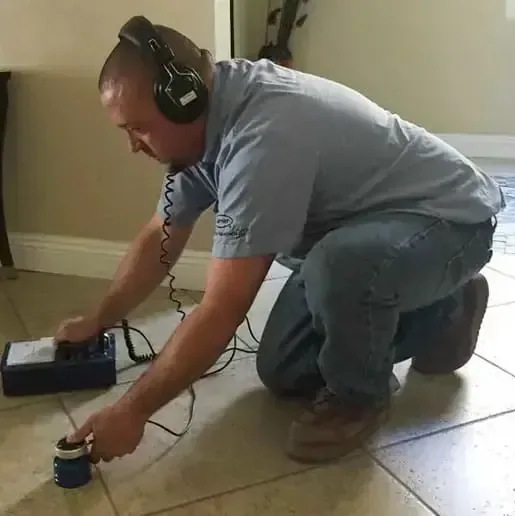
A hidden leak rarely announces itself. In Hesperia, the City describes a simple test with the water meter that separates a leak inside the house from one outside it, which saves guessing before any floor or wall is opened.
Key takeaways
- Turn off every faucet and appliance, including the washing machine, the automatic ice maker and the irrigation system, then watch the meter dial or the small low flow detector for movement.
- Hesperia meters are usually in a rectangular or oval box in the ground near the street, and at the rear of many properties they sit in utility easements.
- Closing the house shutoff valve tells the story: if the movement stops, the leak is inside the house, and if it continues, the leak is between the meter and the house or in the irrigation system.
- A leaking toilet shows with two drops of food coloring in the tank and a wait of 15 to 30 minutes.
- Once a leak is inside the house, wet floors and walls need extraction and drying before any repair.
Signs that justify a meter test
A hidden leak can sit behind a wall, above a ceiling or under a concrete floor for a long time. By the time a stain shows, water has often been moving through the materials for days.
A leak under a concrete floor, covered by slab leak water damage, is one of the harder ones to spot. A few clues tend to appear before any stain does.
A leak that has run for a long time can also show up as peeling paint or a damp smell in a closet or cabinet.
- A water bill that climbs without a change in how the household uses water
- The sound of running water when every fixture is closed
- Warm or damp spots on a floor, or flooring that lifts or buckles
- Baseboards that swell or paint that bubbles low on a wall
The City of Hesperia leak test, step by step
The test takes no tools beyond a look at the meter. Everything that uses water has to be off first, or the dial will move for ordinary reasons.
Record what the dial or detector shows before the water users are turned back on.
- Turn off every faucet and every appliance that uses water
- Include the washing machine, the automatic ice maker and the irrigation system
- Open the meter box and find the meter dial or the small low flow detector
- Watch for any movement of the dial or the detector
Finding the meter box
Hesperia water meters are usually in a rectangular or oval box in the ground near the street. At the rear of many properties, they sit in utility easements instead.
Questions about water service and billing are handled at the Utility Billing counter inside City Hall.
A phone photo of the meter dial before and after the test makes the comparison easy to share with a plumber.
Reading the result
Write down what the dial did before and after the valve was closed. Those two observations are what a plumber or the restoration crew needs first.
Movement stops when the house valve closes
The City says to close the house shutoff valve and watch the meter again. If the movement stops, the leak is inside the house, in a pipe, a fixture or an appliance connection.
Movement continues
If the dial or detector keeps moving, the leak is between the meter and the house or in the irrigation system. That repair sits outside the walls and belongs to a plumber, while restoration begins only if water reached the structure.
The toilet check with food coloring
A toilet can leak into the bowl without making a sound, and the meter test alone will not always say which fixture is to blame. The City describes a quick dye test.
A toilet can waste water quietly, so this check is worth doing even when the meter test looks clear.
- Add two drops of food coloring to the toilet tank
- Do not flush, and wait 15 to 30 minutes
- Color in the bowl means the flapper valve needs replacing
Mistakes that hide a leak
Most failed leak tests come from a missed water user, not from a missing leak. A few slips account for most of the confusion.
- Leaving the irrigation system on, which the City lists with the other water users to turn off
- Forgetting the automatic ice maker or the washing machine
- Testing while a dishwasher or a toilet is refilling
- Reading the meter once and assuming a small movement is normal
- Painting over a stain before the source is found
- Using a faucet or flushing a toilet while the meter is being watched
What happens once the leak is inside the house
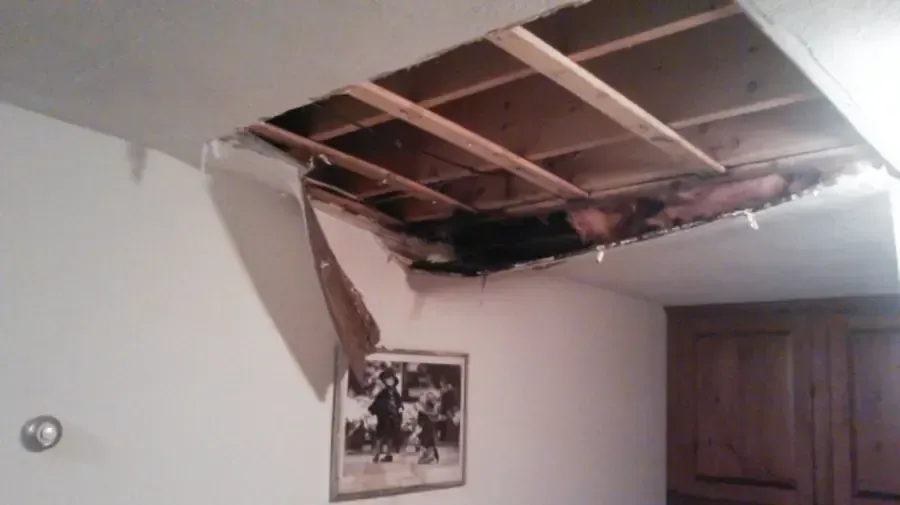
When the test points inside, the next question is how far the water traveled. The crew maps moisture in walls, ceilings and floors with a meter and infrared imaging before anything is opened.
- Standing water is extracted first
- Wet flooring, baseboards and drywall are removed where they will not dry in place
- Dehumidifiers and air movers run until readings reach dry reference levels
- The plumber repairs the pipe, and the finish work follows the drying
Leaks in walls and ceilings
A burst or split pipe in a wall is handled under burst pipe water damage, with the cavity opened and dried. Wet drywall and insulation come out where they will not dry in place.
Water that has moved behind a wall can travel along framing to a spot far from the leak, so a stain is a clue to the area and not an exact location.
Leaks under the slab
A slab leak means lifting wet flooring and drying the concrete with dehumidifiers, as covered under slab leak water damage. The plumber repairs the pipe, and finish work follows the drying.
Help with water damage around Hesperia follows the same order whether the leak was in a wall or under the floor.
Questions
Does the irrigation system have to be off for the test?
Yes. The City lists the irrigation system with the washing machine and the automatic ice maker as water users that must be off before checking the meter.
Where is the water meter in Hesperia?
Meters are usually in a rectangular or oval box in the ground near the street. At the rear of many properties, they sit in utility easements.
What if the meter keeps moving after the house valve is closed?
The City says that points to a leak between the meter and the house or in the irrigation system. A plumber repairs that part, and restoration is needed only if water entered the structure.
How can a leaking toilet be confirmed?
Two drops of food coloring in the tank, a wait of 15 to 30 minutes and color in the bowl show that the flapper valve needs replacing.
Who repairs a slab leak, a plumber or a restoration crew?
A plumber repairs the leaking pipe. The restoration crew extracts water, lifts wet flooring and dries the slab and walls.
Does slow movement on the meter still count?
The test looks for any movement with every water user off, so slow movement still points to water going somewhere. Closing the house shutoff valve then shows whether it is inside or outside the house.