Barstow averages only 4.96 inches of precipitation a year, with measurable rain on about 24 days. A roof can sit dry for months, take a hard storm all at once and show the damage first as a stain spreading across a ceiling.
Key takeaways
- Nearly 80% of Barstow's precipitation falls from November through April, and monsoon storms can hit in other months.
- The heaviest rainfall in 24 hours was 2.28 inches on September 10, 1976, a reminder that a single storm can do the damage.
- A ceiling stain can come from the roof or from a pipe above the ceiling, and the repair is different for each.
- Wet drywall and insulation above a stain are opened and dried, because water spreads further inside than the visible ring.
- Tenants and owners each have a part in reporting and documenting a leak.
Why a dry climate still produces wet ceilings
Nearly 80% of Barstow's precipitation falls from November through April, and monsoon storms can hit in other months. Between those storms, roofs bake for long stretches.
The record high is 120 degrees on July 23, 1996, and long stretches of sun are hard on roofing seams, sealant and flashing.
When a storm finally arrives, the weak points show up fast. The heaviest rainfall in 24 hours on record is 2.28 inches on September 10, 1976, which shows how much water one storm can deliver.
- Flashing around vents, chimneys and skylights
- Cracked or dried out sealant at seams
- Tiles or shingles shifted by wind
- Roof penetrations for pipes and vents
- Low spots where dust and debris hold water
Reading the stain: roof or pipe?
The source matters because a roofer repairs a roof and a plumber repairs a pipe. A ceiling stain with an unclear source is worth tracing before anything is painted, since paint hides a wet ceiling without drying it.
A lasting fix starts with a ceiling leak water damage check that tells the two causes apart.
Neither guess replaces a moisture reading, and a pro can check both causes in one visit.
Signs pointing to the roof
- The stain appears or grows during or right after rain
- Stains sit near an exterior wall or follow the slope of the roof
- Attic insulation looks flattened or dark under the damaged spot
Signs pointing to a pipe
- The stain appears on a dry day
- It sits below a bathroom, a kitchen or attic plumbing
- It grows slowly and steadily instead of in bursts after a storm
The first hours indoors
The goal in the first hours is to keep water off belongings and out of more of the house. Nothing here requires climbing onto a wet roof, which is a fall risk.
- Move furniture, rugs and electronics out from under the stain
- Set a bucket under the drip with a plastic sheet beneath it
- If the ceiling bulges, make a small hole at the lowest point, away from lights and fans, so the water drains into the bucket
- Switch off wet ceiling fixtures and stay clear of them
- Photograph the stain, the drip and any wet attic insulation
Checking the attic after a storm
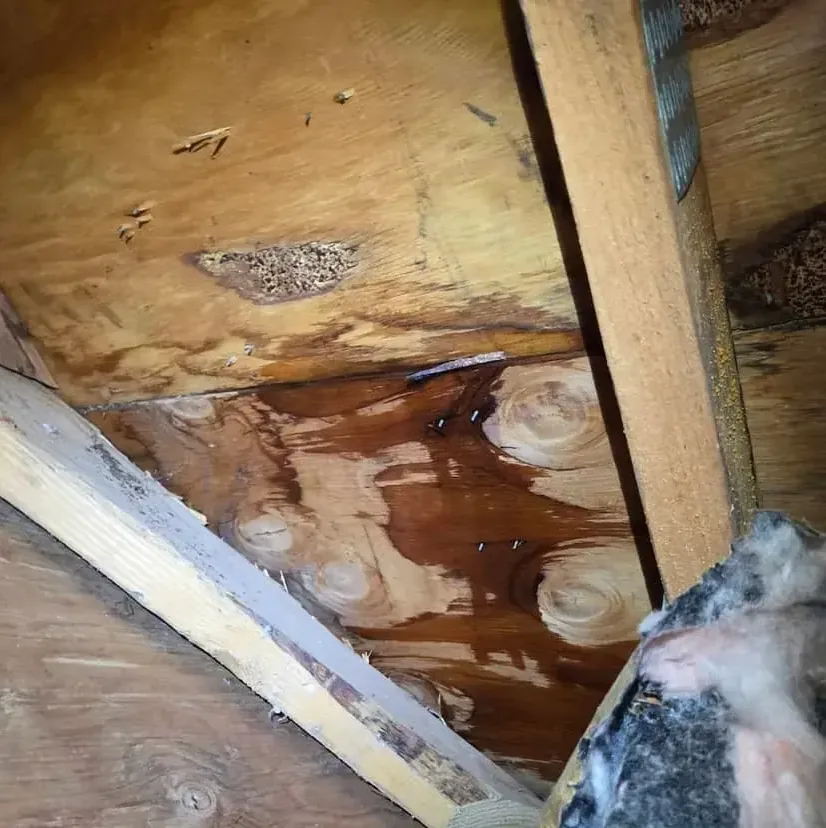
The attic shows what the ceiling cannot. Insulation that is flattened, dark or cold to the touch marks the path the water took, and damp wood near a vent or chimney points to the entry spot.
A flashlight and a careful look from the hatch are enough for a first check. Walking across the framing is a job for someone who knows where it is safe, because a joist is the only thing that holds a person up.
- Flattened or discolored insulation
- Daylight or damp wood near a vent, chimney or skylight
- Water stains on the underside of the roof deck
- Rusty nail tips with beads of moisture
- A musty smell near the damaged spot
What gets opened and dried
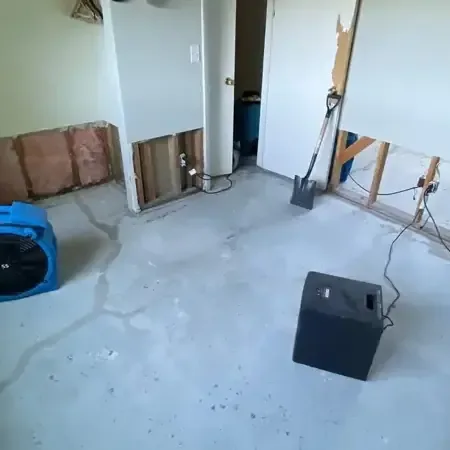
Water from a roof leak follows framing and settles in insulation, so the visible ring is a fraction of the wet area. The crew opens the ceiling where drywall is saturated, removes soaked insulation and dries the framing before anything is closed back up.
Details on the roof side are laid out under roof leak water damage. The roofer closes the opening, and the drying team protects and dries the interior.
Damp drywall and insulation can start growing mold in 24 to 48 hours, which is why wet material above a ceiling is not left to dry on its own.
- A moisture meter and infrared imaging map the wet area
- Saturated drywall and insulation are cut out
- Air movers and dehumidifiers dry the framing and the room
- Readings are repeated until they match dry reference material
Tenants, owners and roofs
In 2020, the census counted 9,620 housing units in Barstow, and 56.2% of occupied homes were rented while 43.8% were owner occupied. A roof leak therefore often involves a tenant, a landlord or manager and sometimes an insurer.
A written note to the owner or manager, sent right away, starts the record.
- Photograph the damage with the date visible
- Keep receipts for buckets, tarps and any emergency work
- Ask the owner or manager before arranging roof work on a rental
- Keep the drying log from the crew with the other records
Preparing before the next rain
With most rain falling between November and April, the weeks before November are the best time to look at a roof. A few checks cost little next to a wet ceiling.
- Have a roofer look at flashing and sealant before the wet season
- Clear dust and debris from roof valleys and drains
- Keep a tarp, a bucket and plastic sheeting where they can be found quickly
- Look into the attic after the first real storm for damp insulation
- Keep the contact for a local drying crew handy, since Barstow water damage help is easier to arrange before a storm
Questions
How much rain does Barstow get?
About 4.96 inches of precipitation a year, with measurable precipitation on about 24 days. Nearly 80% of it falls from November through April.
Can a ceiling stain simply be painted over?
Paint hides the stain but not the moisture. Wet drywall and insulation above it need to be dried first, or the stain returns and the material weakens.
Is a roof leak a roofer job or a restoration job?
Both. A roofer repairs the roof, while the restoration crew handles the wet ceiling, insulation and framing.
How do monsoon storms affect roofs?
Monsoon storms can bring flash flooding in the Barstow area, including one that closed State Route 247, and the same storms drive heavy rain across roofs that have been dry for months.
Who reports a roof leak in a rental home?
The tenant tells the owner or property manager in writing and keeps dated photos. The owner then decides on the roof repair and any claim.
How soon should wet insulation come out?
Soaked insulation holds water against the framing and ceiling, so it is removed promptly. Dry insulation above a small leak can often stay in place.