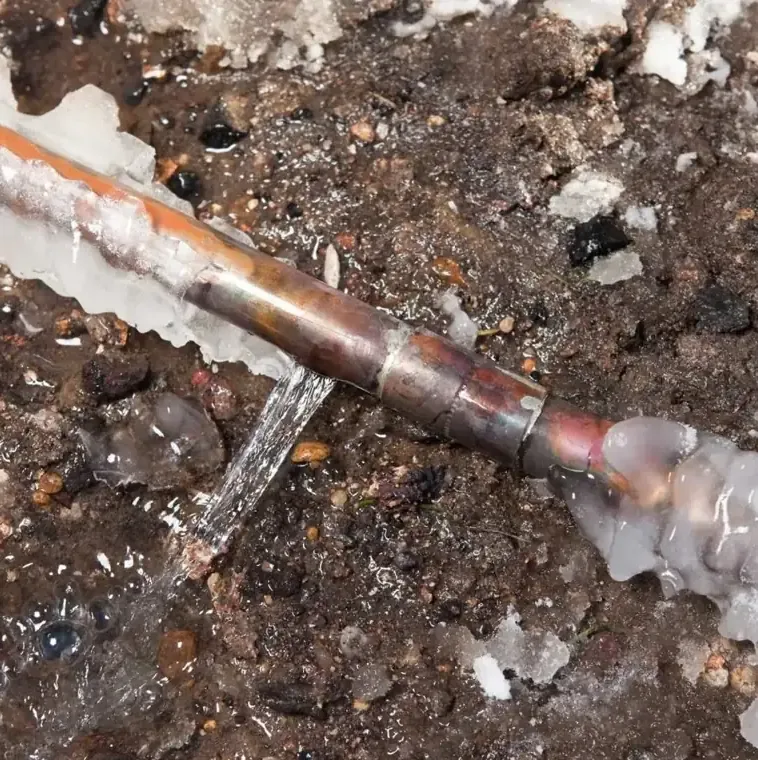
Apple Valley has cool winters, with average lows of 30 degrees in December and 31 degrees in January. Pipes in an attic, a garage or an outside wall can freeze on those nights, and the real damage often appears only when the ice melts.
Key takeaways
- Apple Valley's average lows are 30 degrees in December and 31 degrees in January.
- The lowest temperature on record is 1 degree below zero Fahrenheit, set in 1949.
- Pipes in attics, garages, exterior walls and outdoor spigots freeze first.
- A frozen pipe can look fine until it thaws, and a split then releases water inside a wall or ceiling.
- Closing the main shutoff valve first limits the water, and extraction and drying follow.
What December and January lows mean for pipes
Apple Valley has a semiarid climate with cool winters and very hot, dry summers. Average lows sit at 30 degrees in December and 31 degrees in January, which is just under freezing on a typical winter night.
The record low is 1 degree below zero, set in 1949. Records like that are rare, but pipes do not need extreme cold to freeze when they are exposed.
Because summers are so hot, freeze protection is easy to forget until the first cold night.
A cold night that follows a mild afternoon can catch pipes by surprise, because the air outside cools faster than the walls around the pipes.
Where pipes freeze first
Cold finds the pipes with the least warmth around them. A quick look at each of these spots before December is worth the time.
The pipe freeze risk check is a quick way to size up a home's exposure.
Rooms nobody uses are easy to overlook. A guest bathroom or a laundry room on an outside wall can drop to the same temperature as the garage when the heat is kept low.
- Garage walls and ceilings, especially where pipes run along an outside wall
- Attic pipes that sit above the insulation
- Pipes in exterior walls that face the wind
- Outdoor spigots and irrigation connections
- Spots where a pipe enters the house through a gap or vent
How ice splits a pipe
Water expands when it freezes, and the ice itself is rarely what splits the pipe. The damage comes from pressure that builds in the trapped water between the ice and a closed faucet or valve.
That is why a split often sits at a joint or a low point away from the frozen spot. It also explains why a pipe can seem fine until the ice melts and water flows again.
A pipe that froze once may be weaker afterward. A small crack can open on a later cold night, even when the first freeze caused no visible leak.
- A hairline crack that weeps
- A burst seam along the length of a pipe
- A cracked fitting or valve
- A bulge in the pipe wall
Prepare before the first cold snap
Most prevention costs very little. The order below takes an afternoon.
A shutoff valve that sticks is not worth discovering on a freezing morning. Turning the main valve off and on once before winter shows whether it still moves.
- Disconnect garden hoses and cover outdoor spigots
- Wrap exposed pipes in foam insulation
- Seal gaps where pipes enter an exterior wall
- Open cabinet doors under sinks on freezing nights
- Let a faucet drip slowly on the coldest nights
- Find the main shutoff valve and make sure everyone in the house knows where it is
On the coldest nights
A few extra steps are worth the effort when the forecast drops below freezing.
- Keep the garage door closed
- Leave interior doors open so heat reaches pipes in walls
- Let the faucet farthest from the main drip slowly
- Check that the thermostat is not set back too far overnight
Frozen but not burst: thawing safely
A pipe that has frozen but not split can often be thawed. Slow and gentle is the rule.
- Open the faucet so water can flow as the ice melts
- Warm the pipe with a hair dryer or warm towels
- Never use an open flame or a torch near a pipe or a wall
- Check along the pipe for cracks or damp spots while it thaws
- If the frozen section is inside a wall or ceiling and nothing flows, a plumber is the next step
When the thaw reveals a split
Ice often hides a split. Once it melts, water flows out through the crack inside a wall, ceiling or floor.
The first move is the main shutoff valve. The crew then extracts water and opens wet drywall, as outlined for frozen pipe water damage in Apple Valley and burst pipe water damage.
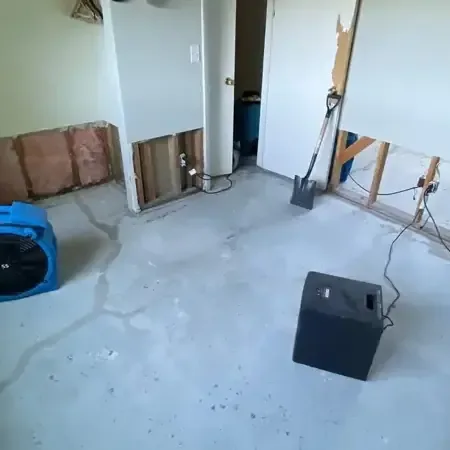
Once the water is off, the crew pumps or vacuums standing water, pulls baseboards and checks the wall, ceiling or floor with a moisture meter. Wet drywall and insulation are opened where they cannot dry in place, and air movers and dehumidifiers finish the job.
Mold can begin to grow on wet material in 24 to 48 hours, so the work starts as soon as the water is under control.
- Staining or bubbling paint on a wall
- A sagging ceiling below an attic pipe
- The sound of dripping inside a wall
- A sudden drop in water pressure
Records worth keeping
- Dated photos of the split pipe and the damage
- The plumber's invoice
- Moisture readings from the drying crew
- A list of damaged belongings
Empty homes, rentals and winter travel
Homeownership in Apple Valley was 65.5% in 2020, compared with 55.9% for California, with 27,181 housing units across the town. Whether a home is owned, rented or empty for a winter trip, someone has to be able to reach the shutoff.
A written plan for a long absence is cheap insurance against a wet surprise.
- Leave the heat on at a safe low setting
- Shut off the main valve and drain the pipes for a long absence
- Ask a neighbor or manager to look in during the trip
- Tell every occupant of a rental where the main shutoff is
- Check the garage and any detached building for exposed pipes
Questions
Do pipes in Apple Valley actually freeze?
Yes. Average lows of 30 degrees in December and 31 degrees in January mean exposed pipes in garages, attics and exterior walls can freeze.
Should a faucet drip all night?
A slow drip keeps water moving, which helps on the coldest nights. It costs little next to a split pipe.
What if a pipe has already split?
Close the main shutoff valve, keep power off near wet areas, photograph the damage and start extraction. Wet drywall and insulation need to be opened and dried.
Can a frozen pipe thaw without damage?
Sometimes, but a pipe that froze may already be cracked. A slow drip and a close look at the pipe after thawing show whether it leaks.
Does a split pipe always leave a stain?
No. Water can run inside a wall or ceiling cavity for a while before a stain appears, so a drop in pressure or the sound of dripping deserves attention.
Is pipe insulation enough on its own?
Insulation slows heat loss but does not add heat. A pipe in a very exposed spot still needs a slow drip or a source of warm air on the coldest nights.