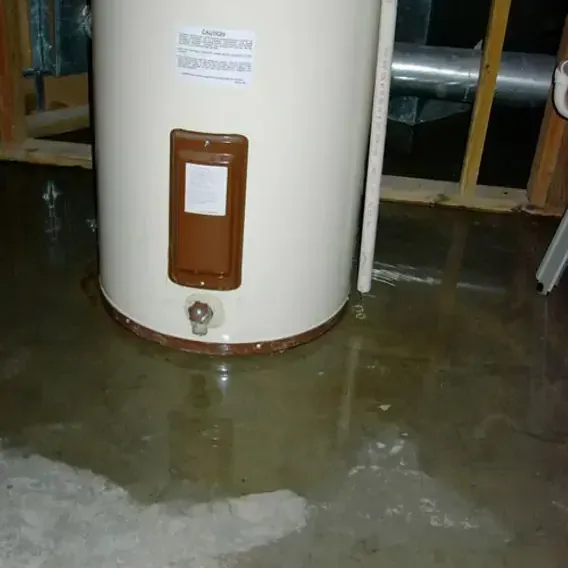
A tank water heater holds enough water to soak a garage, closet or utility room before anyone notices the first puddle. In Adelanto, where large subdivisions filled the southern part of the city during the 2000s housing bubble, a tank failure is a routine job for the local restoration team.
Key takeaways
- A failed tank can release a full load of water, so the cold water supply valve and the power or gas come first.
- Adelanto grew from 18,130 residents in 2000 to 31,765 in 2010 as the housing bubble filled the southern part of the city with large subdivisions along Highway 18.
- Water from a garage tank spreads across the floor and into stored boxes, while a closet tank sends water into wall framing and flooring.
- A leaking tank is replaced rather than patched, so cleanup and replacement need to be scheduled together.
- Dated photos of the tank, the wet area and any damaged contents help with a claim.
Why the Highway 18 building boom matters
Adelanto's population grew from 18,130 in 2000 to 31,765 in 2010, and many large suburban subdivisions went up in the southern part of the city along Highway 18 during the 2000s housing bubble. The city reached 38,046 residents by 2020.
Homes from that period have now carried years of daily hot water use, and equipment that works hard for years eventually fails. That is a general fact about plumbing equipment, not a claim about any one house.
The practical result is simple. A water heater, its supply connectors and the appliances around it deserve a look before they fail.
- Rust stains near the base of the tank or on the fittings
- A relief valve that drips or weeps
- Rumbling or popping while the tank heats
- Damp drywall or a musty smell in the closet or garage corner
Where the water goes
Garage tanks
In a garage, water runs across the concrete toward the lowest point and under stored boxes, shelves and the bottom of the walls. Cardboard soaks quickly and holds water against the wall long after the floor looks clear.
Closet and hallway tanks
In a closet or utility room, the tank sits against drywall, so water moves into the wall base, under flooring and into the next hallway or bedroom. These losses look small on the surface and are wider inside.
A fast water heater leak cleanup keeps the water from wicking further up the wall.
Shutting it off safely
Closing the supply first slows the leak, even if the tank has already lost most of its water. The order below keeps the household out of electrical danger.
Water from a failing tank can be hot, so wet floors near the tank are approached carefully and a puddle is treated as slippery. Anyone who smells gas leaves the house and sorts out the leak afterward.
- Close the cold water supply valve above the tank
- Turn the breaker off for an electric unit, or set the gas control to off for a gas unit
- Stay clear of wet wiring and standing water near the outlet
- Photograph the tank, the puddle and the wet walls before towels and boxes move
- Lift stored items off the floor and open the door so air moves through the space
What the first extraction removes
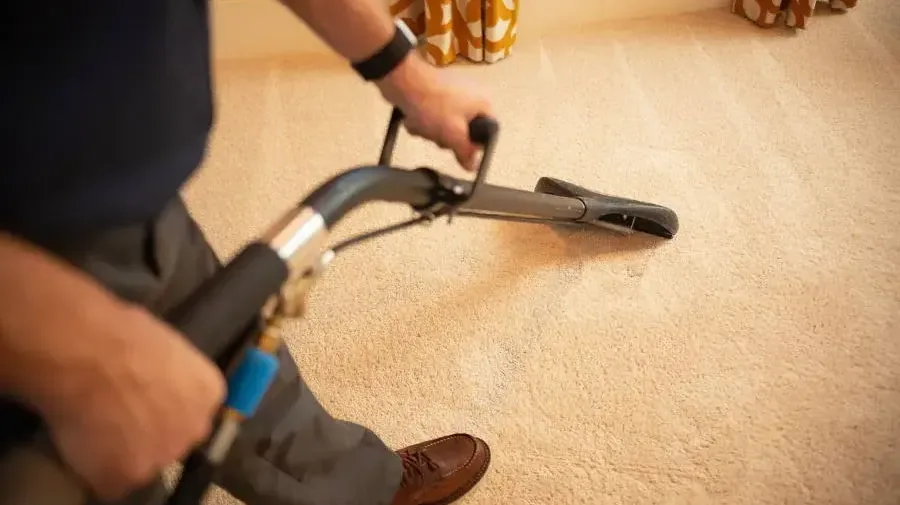
The crew pulls standing water with pumps and wet vacuums, then lifts baseboards to see what the wall base is holding. Water often travels further inside the wall than on the surface, so a moisture meter maps the wet area instead of trusting the visible puddle.
Prompt water extraction matters most at the wall base, where drywall acts like a wick.
- Standing water pumped and vacuumed from the floor
- Baseboards removed to reach the wall base
- Wet insulation and the lowest drywall section cut out when saturated
- Wet flooring in the next room checked and lifted if it will not dry in place
Garage contents and stored items
A garage tank usually shares its space with boxes, tools, holiday decorations and sometimes a second refrigerator or freezer. Anything sitting on the floor when the tank fails is soaked quickly, and cardboard is the first to give way.
Sorting what can be dried from what cannot saves money and keeps wet material from holding moisture against the wall.
- Plastic bins can be wiped, dried and kept
- Wet cardboard is photographed and discarded, since it holds moisture against the wall
- Paper records, photographs and electronics go to a dry room first
- Tools and metal items are dried right away so they do not rust
- A list of what was lost, with approximate values, supports the claim
Tank leak or something nearby?
Not every puddle by a water heater comes from the tank. Fittings, the relief valve discharge pipe and a washer sharing the same closet can all leave water on the floor.
A dry paper towel held against each fitting shows which one is weeping. If the water comes from a washer hose or valve, the job belongs under appliance leak water damage instead.
- Check the tank seams and base for steady dripping
- Check the relief valve and its discharge pipe
- Check the hot and cold connectors above the tank
- Check the washer hoses and valves if the laundry area shares the space
Lowering the odds of a repeat
Small habits limit the damage when the next failure comes. An estimate of how large a wet area can become is available from the water damage cost calculator.
A tank that has leaked once is a good moment to look over the rest of the utility area, including the washer hoses and the shutoff valves, and to work out how the household would handle a repeat.
- Place a drain pan under the tank, with a drain that carries water to a safe spot
- Look at the tank, fittings and relief valve once a year
- Know where the cold water shutoff and the breaker or gas control are
- Replace worn supply connectors when the tank is replaced
- Keep stored items on shelves instead of on the floor
Questions
Should a leaking tank be repaired?
A leaking tank is normally replaced, because a patch or sealant does not hold on a failing steel tank. The cleanup is planned around the replacement so the new unit is not set on a wet floor.
How far does water spread from a garage tank?
That depends on the slope of the floor, what is stored on it and how long the leak ran. The crew traces the wet area with a moisture meter instead of guessing from the visible puddle.
Can the drywall behind a water heater be saved?
Drywall that stayed wet only briefly can sometimes be dried in place. If it has swollen, softened or stayed wet for longer, the lower section is cut out and replaced after the wall dries.
Is mold a concern after a tank leak?
Damp materials can start growing mold in 24 to 48 hours, so extraction and drying begin right away.
What records help an insurance claim after a tank failure?
Dated photos of the tank and the wet area, a list of damaged contents and the crew's moisture readings give an adjuster what is needed to understand the loss.
Does a leaking water heater damage a concrete slab?
Clean water does not harm concrete, but a slab holds moisture for a long time. It is dried with dehumidifiers and checked with a meter before flooring or storage goes back on it.